How to Get from Bali to Sumba: A Seamless Route Guide
- Bali to Sumba Travel Guide Editorial Desk
- Updated
- 10 min read
On This Page
- Decoding Sumba’s Dual Entry Points: Tambolaka vs. Waingapu
- The Direct Flight: Your Primary Artery from Bali
- The Luxury Operator Approach: Charters and Coordinated Transfers
- Bali Airport (DPS) Connection
- The Sea Route: An Adventurer’s Detour, Not a Luxury Passage
- Quick FAQ: Your Sumba Transit Questions Answered
- Primary Route: Fly directly to Tambolaka Airport (TMC) in West Sumba, which serves the island’s premier resorts.
- Alternative Route: Fly to Umbu Mehang Kunda Airport (WGP) in Waingapu, East Sumba, for exploring the island’s eastern savannas.
- Flight Duration: The non-stop journey takes approximately 70 to 90 minutes.
The air in Denpasar’s domestic terminal is thick with the scent of clove cigarettes and anticipation. You leave behind the familiar, fragrant chaos of Bali for a promise whispered on the lips of seasoned travelers: Sumba. This is not a simple hop between islands; it is a deliberate step back in time. The aircraft, a compact ATR 72 turboprop, feels more like a private expedition vessel than a commercial carrier. As it climbs, the dense green of Bali gives way to the deep blue of the Savu Sea, and soon, a new coastline appears—fierce, golden, and raw. This is the moment the journey truly begins, the transition from one of Indonesia’s most-visited islands to one of its most protected and enigmatic. The 400-kilometer passage is more than a flight; it’s a portal to the Land of the Marapu, where ancient traditions hold sway and the luxury is in the untamed space itself.
Decoding Sumba’s Dual Entry Points: Tambolaka vs. Waingapu
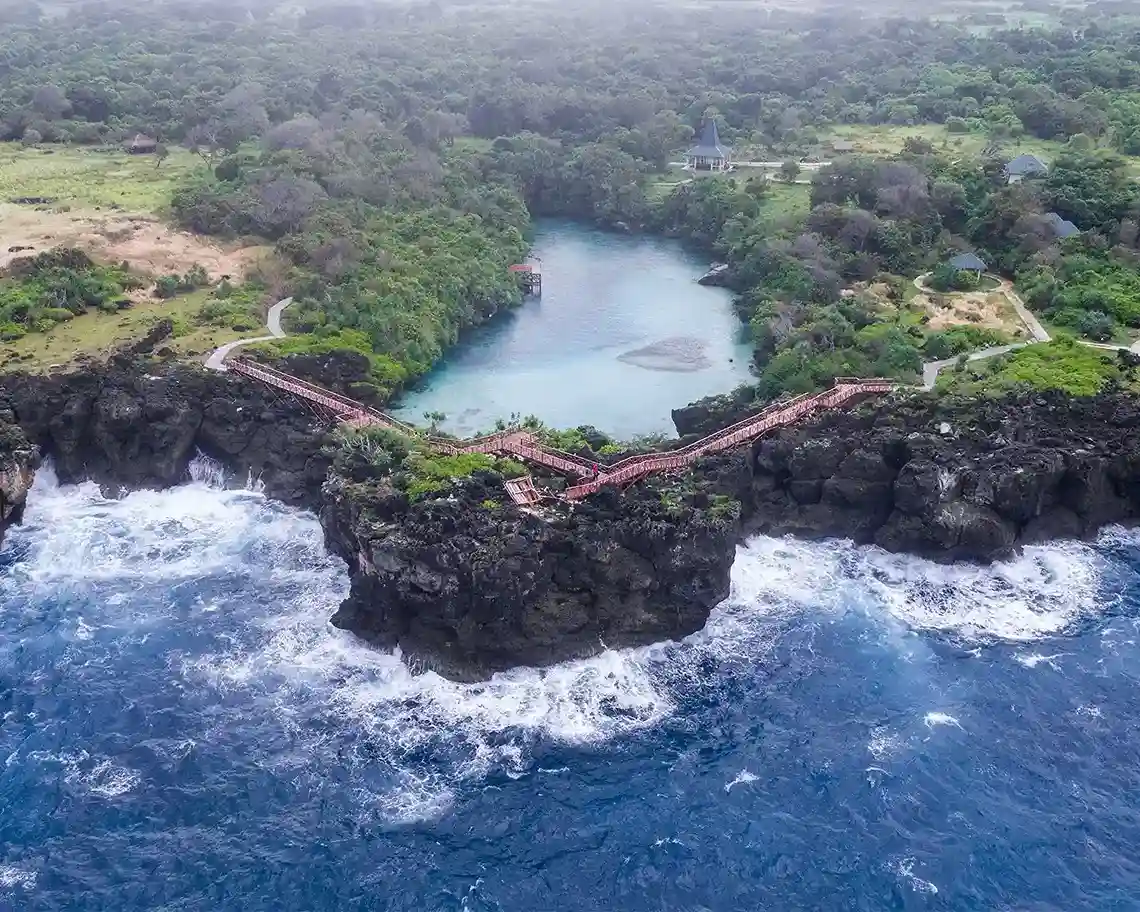
Understanding Sumba’s geography is the first step in crafting a seamless travel plan. The island, at 11,052 square kilometers, is roughly twice the size of Bali but with less than 20 percent of its population, creating a profound sense of expanse. Your arrival point dictates the entire cadence of your trip, as a formidable four-hour drive separates the island’s two primary airports. Your choice is not merely logistical; it is strategic. The primary gateway for the discerning traveler is Tambolaka Airport (TMC) in the southwest. This is the arrival hub for those destined for the world-renowned shores of NIHI Sumba or the cliffside elegance of Lelewatu Resort. West Sumba is characterized by its rolling hills, traditional villages with high-peaked clan houses, and the site of the annual Pasola festival, a dramatic ritual of mock-battle on horseback. From TMC, the island’s most celebrated experiences, like the otherworldly Weekuri Lagoon, are within a manageable 60 to 90-minute drive. In contrast, Umbu Mehang Kunda Airport (WGP) serves the eastern capital of Waingapu. This region is defined by its vast, arid savannas that evoke the African plains, its celebrated ikat weaving traditions found in villages like Prailiu, and the iconic “dancing trees” of Walakiri Beach. As James Richardson, a leading Indonesia specialist at the luxury travel firm Abercrombie & Kent, advises, “We always build itineraries by first selecting the resort and primary experiences, then booking the corresponding flight. Flying into Waingapu for a stay at NIHI means sacrificing half a day to a transfer that could be spent in the resort’s spa or on the waves at Occy’s Left.”
The Direct Flight: Your Primary Artery from Bali
The commercial flight is the established and singular artery for any well-planned bali to sumba itinerary. The route is primarily serviced by two carriers: Wings Air (a subsidiary of the Lion Air Group) and NAM Air (part of Sriwijaya Air). Forget wide-body jets; these airlines operate a fleet of ATR 72 and similar turboprop aircraft, which offer a more intimate and adventurous feel to the short 70-minute flight. Booking these flights requires foresight. We recommend securing tickets at least three to four months in advance, particularly if your travel dates fall within the peak dry season from June to September. For those wishing to witness the Pasola festival in February or March, booking six months out is not overly cautious. Fares fluctuate significantly, but a one-way ticket typically costs between $80 and $160 USD. The most critical detail for travelers accustomed to generous international allowances is baggage. These smaller aircraft have a strict checked baggage limit, usually just 10 kilograms per passenger. Exceeding this can result in steep fees, often charged per kilogram. It is a vital logistic to confirm with your carrier or travel advisor beforehand. While the flight itself is spartan—no in-flight entertainment or business class—it is merely a functional bridge. The luxury is not in the transit but in the destination it unlocks with such efficiency.
The Luxury Operator Approach: Charters and Coordinated Transfers
For those for whom time is the ultimate luxury and seamlessness is non-negotiable, the journey can be elevated. The most exclusive method is a private charter. While not a scheduled service, operators like Susi Air can be contracted for private flights from Bali directly to Sumba. This option provides complete control over timing and privacy, but comes at a significant premium, with costs for a small aircraft easily exceeding $15,000 for a one-way transfer. A more common and highly effective approach is to leverage the expertise of Sumba’s premier resorts. Properties like NIHI and Lelewatu have refined the arrival process into an art form. Their guest relations teams act as a personal travel concierge, booking the commercial Wings Air or NAM Air flights on your behalf and bundling the cost into your stay. “Our guest experience begins the moment they decide to visit,” explains a representative from NIHI’s reservations team. “We coordinate the flight from Denpasar, handle all ticketing, and ensure our team is waiting on the tarmac at Tambolaka.” This service eliminates any potential friction. Upon landing, guests are met directly, their luggage is handled, and they are guided to a pre-arranged, air-conditioned 4×4 for the scenic 90-minute drive to the resort, often complete with cold towels and refreshments. This coordinated approach transforms the final leg of the journey from a potentially stressful transfer into the first immersive chapter of the Sumba experience.
Bali Airport (DPS) Connection
A smooth transition through Bali’s I Gusti Ngurah Rai International Airport (DPS) is pivotal for a stress-free start to your Sumba expedition. All flights to Tambolaka and Waingapu depart from the Domestic Terminal. If you are connecting from an international flight, be prepared for a multi-step process. You must first clear immigration, claim your luggage from the international carousel, pass through customs, and then make your way to the domestic terminal. This can be done via a short walk or an airport shuttle, but it’s wise to allocate a minimum of three hours between your international arrival and your domestic departure to Sumba. The domestic check-in counters for Wings Air and NAM Air can be crowded and somewhat disorganized compared to their international counterparts. We strongly advise arriving at the domestic terminal at least two hours before your flight’s departure time. For a more comfortable wait, several pay-per-use lounges are available, such as the Premier Lounge, offering a quiet space away from the main departure hall. While some travelers may prefer to spend a night in a hotel near the Bali airport to break up the journey, a well-timed connection is entirely feasible and allows you to wake up to the wild beauty of Sumba that much sooner. Our comprehensive Bali to Sumba — Flight + Resort + Cultural Tour Guide offers detailed strategies for optimizing this connection.
The Sea Route: An Adventurer’s Detour, Not a Luxury Passage
While our focus is on a seamless and comfortable journey, it is worth acknowledging that an alternative route exists—one for the intrepid backpacker, not the luxury traveler. The overland and sea journey from Bali to Sumba is a multi-day odyssey involving a chain of public ferries and long-distance buses. The route typically involves a ferry from Padang Bai in Bali to Lembar in Lombok, an overland crossing of Lombok, another ferry to Sumbawa, a lengthy bus journey across the island of Sumbawa to the port of Sape, and finally, a long-haul ferry to Waikelo or Waingapu in Sumba. State-owned PELNI ferries service parts of this route, but schedules are notoriously fluid and comfort is minimal. As documented by Indonesia’s official tourism board, these sea links are the lifeline for local commerce, not tourism. This journey can take upwards of 72 hours and exposes travelers to significant potential for delays and discomfort. It is a path of raw, unvarnished travel that stands in stark contrast to the 90-minute flight. For anyone whose time is valuable and whose goal is to arrive rested and ready to experience the island’s unique culture and five-star hospitality, the sea route is not a viable consideration. It serves only to highlight the remarkable efficiency and value of the direct flight that makes this incredible destination so accessible.
Quick FAQ: Your Sumba Transit Questions Answered
Even with a clear plan, specific questions often arise when coordinating travel to a destination as remote as Sumba. Here are concise answers to the most common queries we receive from our readers.
What is the best time of year to travel from Bali to Sumba?
The dry season, which runs from April through October, is ideal. During these months, flight schedules are most reliable, and the island’s landscapes are a striking gold. The shoulder months of April, May, and October often provide the best balance of good weather and fewer visitors.
Is there a business class option on flights to Sumba?
No. The route is exclusively served by turboprop aircraft like the ATR 72, which feature a single-class, all-economy cabin. The luxury of the bali to sumba journey is found in the seamless ground services provided by top resorts and the natural beauty of the destination itself.
How far are the main resorts from Tambolaka (TMC) airport?
The transfer from Tambolaka to the premier resorts in the southwest is part of the experience. The drive to NIHI Sumba takes approximately 90 minutes, while the journey to Lelewatu Resort is about 45 minutes. These transfers are typically arranged by the resort and traverse scenic, rural landscapes.
What is the protocol if my flight is cancelled?
Cancellations, though not frequent, can occur due to weather or operational reasons. This is where having comprehensive travel insurance and booking through a reputable travel advisor or directly with a high-end resort provides a crucial safety net. They will manage the rebooking process and adjust your transfers and accommodations accordingly, minimizing disruption.
The journey from the Island of the Gods to the Land of the Marapu is a transition between two worlds, a passage from the familiar to the extraordinary. While the logistics may seem complex, they are simply the prelude to one of Asia’s most profound travel experiences. A direct flight, booked with foresight and preferably coordinated through your resort, is the key to unlocking this island with grace and ease. Planning your bali to sumba adventure starts with understanding these crucial logistics. For a comprehensive look at crafting the perfect itinerary, from flights and five-star stays to authentic cultural encounters, explore our complete Bali to Sumba Travel Guide.