About Our Bali to Sumba Travel Guide: Method, Trust, and Expertise

The passage from Bali to Sumba is more than a geographical transition; it is a shift in time and sensibility. While Bali offers a familiar and vibrant brand of tropical escape, Sumba remains an enigma—a rugged, esoteric island governed by ancient traditions and defined by a profound sense of solitude. The journey requires precision, insight, and a trusted resource. This page outlines the principles and practices that define the Bali to Sumba Travel Guide, detailing our origin, our meticulous curation method, and the foundation of our expertise. We do not merely provide information; we provide vetted intelligence for the discerning traveler. See also: Contact pricing.
Our Genesis: A Commitment to Authentic Sumba Travel
The Bali to Sumba Travel Guide was founded in 2018 by Adrian Finch, a former foreign correspondent with over a decade of experience covering Southeast Asia. During his assignments, Finch recognized a critical information gap. Travelers departing from Denpasar were well-served with information for Java, Lombok, and the Gilis, but planning a trip from Bali to Sumba island was an exercise in navigating fragmented, often outdated advice. The logistics of the Bali-Sumba flight, the choice between its two primary airports, and access to its guarded cultural ceremonies were subjects of speculation rather than fact. See also: Bali to Sumba Travel Guide.
The founding insight was simple: a destination as complex and rewarding as Sumba demands a dedicated, authoritative resource. The intent was not to “discover” Sumba, but to create a reliable conduit for travelers who appreciate its character and wish to engage with it respectfully and efficiently. We focus exclusively on the transit corridor from Denpasar to Sumba, enabling us to achieve a level of detail and accuracy that generalist travel platforms cannot match. Our work is predicated on the belief that a well-planned journey is the prerequisite for a profound travel experience, particularly when the destination is one of the last bastions of megalithic culture in the Indonesian archipelago.
The Curation Method: How We Vet Your Bali to Sumba Itinerary
Our reputation rests on the quality of our information. Our process is rigorous and grounded in direct, repeated verification. We do not rely on third-party accounts or aggregated online content. Instead, our small team of researchers based in Bali and Sumba maintains a constant flow of primary-source intelligence. This involves quarterly reviews of flight schedules, direct communication with resort management, and on-the-ground confirmation of road conditions and transfer services. The result is a set of recommendations built on verifiable data, not marketing copy.
A core component of our method is clarifying the initial, most critical decision: the flight from Denpasar (DPS). Understanding the nuances of this 70-minute flight is fundamental to structuring any Sumba itinerary. Travelers must choose between two airlines, Wings Air and NAM Air, each with distinct operational characteristics. We maintain a current database on these services, which we present here not as a booking engine, but as an example of the granular detail we provide.
Flight Comparison: Denpasar (DPS) to Sumba (TMC/WGP)
| Attribute | Wings Air (Lion Air Group) | NAM Air (Sriwijaya Air Group) |
|---|---|---|
| Aircraft | ATR 72-600 | ATR 72-600 |
| Sumba Airports Served | Tambolaka (TMC), Waingapu (WGP) | Tambolaka (TMC), Waingapu (WGP) |
| Typical Checked Baggage | 10 kg (surcharge for surfboards) | 15 kg |
| Estimated One-Way Fare | $80 – $140 USD | $95 – $160 USD |
| Operational Note | Operates with higher frequency; subject to schedule changes common within the Lion Air group. | Generally fewer schedule changes but may have less frequent service on certain days. |
This data-centric approach extends to every facet of the journey, ensuring that when we advise on a Bali to Sumba flight, we do so with an understanding of its practical implications for your entire trip.
Navigating Sumba’s Gateways: Tambolaka (TMC) vs. Waingapu (WGP)
A successful trip from Bali to Sumba island hinges on selecting the correct airport. This choice dictates the logistical flow, travel times, and overall character of the visit. Our guidance is based on a strategic assessment of a traveler’s primary objectives—be it resort-based relaxation, cultural immersion, or a combination of both. We do not present the airports as equals; they serve distinctly different functions.
Tambolaka Airport (TMC), in Southwest Sumba, is the principal port of entry for travelers focused on the island’s premier resorts and its most prominent cultural events.
- Resort Proximity: TMC is the logical choice for guests of Nihi Sumba (a 90-minute drive) and Lelewatu Resort (a 45-minute drive). The journey from the airport along the southern coastal road is a direct introduction to the island’s landscape. A pre-arranged private transfer, costing approximately $85 USD, is standard.
- Cultural Access: This airport provides the most efficient access to the western districts of Kodi, Lamboya, and Wanokaka, the primary locations for the annual Pasola festival.
- Infrastructure: While modest, the airport is functional and accustomed to handling international visitors connecting from a Denpasar to Sumba flight.
Waingapu Airport (WGP), in East Sumba, serves the island’s largest town and is the gateway to its renowned textile villages and distinct eastern landscapes.
- Eastern Exploration: WGP is ideal for travelers wishing to explore the ikat weaving centers of Prailiu, visit the “dancing trees” at Walakiri Beach, or venture into the savannahs of the island’s eastern half.
- Logistical Consideration: It is critical to note that the drive from WGP to the western resorts like Nihi is substantial, typically lasting four to five hours over roads of variable quality. Choosing WGP for a stay in the west is a significant logistical misstep.
- Local Hub: As the island’s commercial center, Waingapu offers a different perspective on Sumbanese life, but it is less oriented toward the type of luxury tourism found in the west.
Our role is to provide this clarity upfront, preventing the logistical errors that can compromise a highly anticipated trip.
Vetted Accommodations: Beyond the Brochure at Nihi and Lelewatu
Our analysis of Sumba’s leading properties extends far beyond amenities lists and professional photography. We assess them as integral components of the Sumba experience, evaluating their ethos, their integration with the local community, and their logistical execution. We maintain direct relationships with management, allowing us to understand their operations from the inside.
Nihi Sumba: The property that first placed Sumba on the global map for luxury travel. Founded as a surf camp in 1988 by Claude and Petra Graves, it has evolved into a 33-villa estate on 567 acres of protected land. Our evaluation highlights key differentiators that define its value proposition:
- The Origin Story: Its foundation is built on the private surf break, “Occy’s Left,” which remains a central, though now not exclusive, part of its identity. Access is still carefully managed.
- Experiential Design: The resort pioneered experiential luxury in the region with programs like the “Spa Safari” at Nihioka and its significant philanthropic arm, the Sumba Foundation, which has funded over 60 schools and 250 water stations.
- Financial Commitment: With rates for one-bedroom villas beginning around $1,600 USD per night during the high season (April-October), a stay is a considerable investment. Our guidance ensures clients understand exactly what this entails, from the all-inclusive structure to the logistics of its private charter options from Bali.
Lelewatu Resort Sumba: A newer entrant that offers a different interpretation of Sumbanese luxury. Perched on a cliffside overlooking a private bay, Lelewatu’s 27 villas are architecturally inspired by traditional Marapu homes. Our assessment focuses on its distinct positioning:
- Architectural Integrity: The resort’s design is a direct homage to Sumbanese building traditions, with high-pitched thatched roofs and extensive use of local wood and stone. This aesthetic focus provides a strong sense of place.
- Location and Privacy: Situated closer to Tambolaka Airport than Nihi, it offers a high degree of seclusion and a dramatic coastal setting. Its Maraga Spa is a key feature, built into the cliffs.
- Value Proposition: Lelewatu provides a luxury experience at a different price point, with villas often starting in the $700-$900 USD range, offering an alternative for travelers seeking Sumba’s tranquility without the top-tier expense of Nihi.
Cultural Acumen: Understanding Marapu and the Pasola Festival
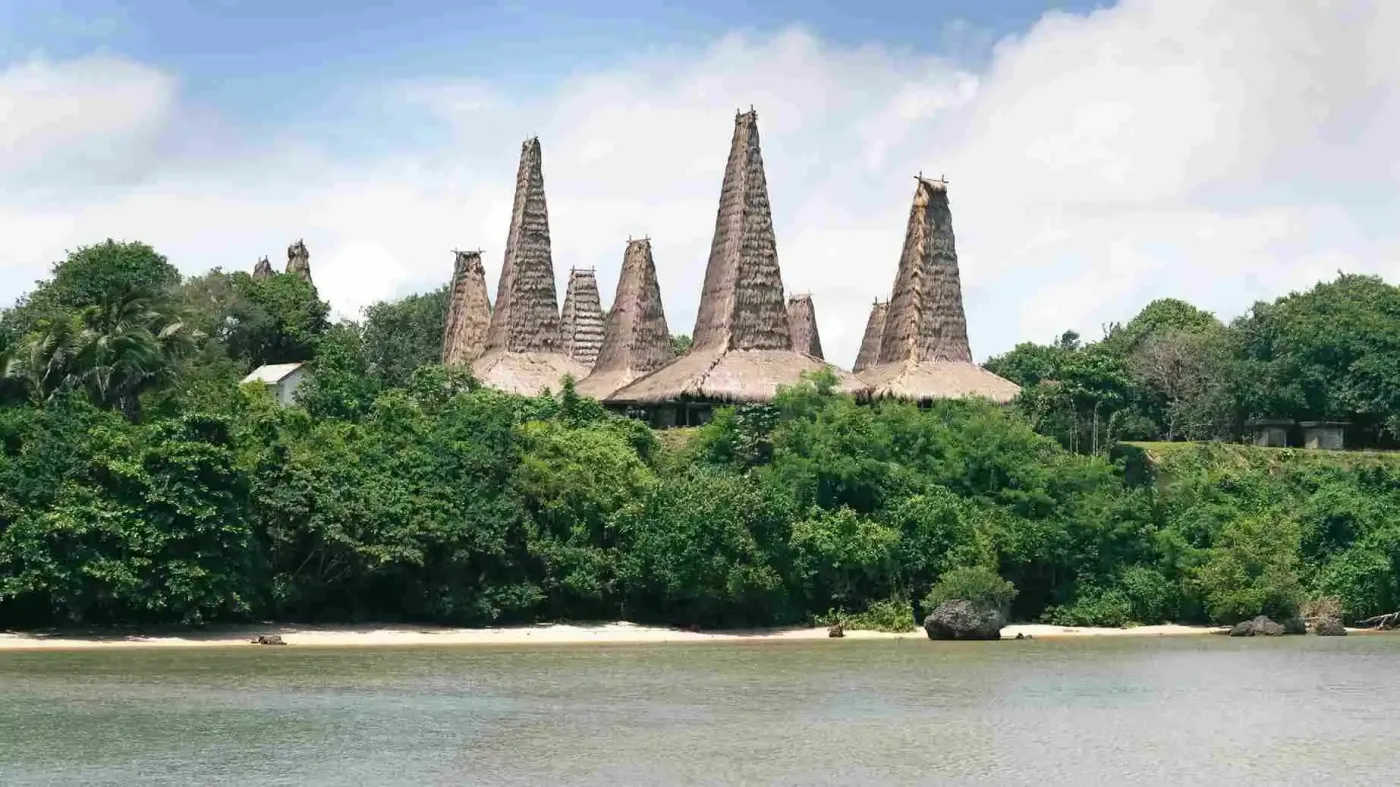
Engaging with Sumba requires a baseline understanding of its unique cultural fabric. Our expertise is not merely logistical; it is anthropological. We provide the context necessary to appreciate that Sumba is not a theme park but a living, breathing society where ancient beliefs dictate the rhythm of life. The dominant belief system, Marapu, is a form of ancestral worship that influences everything from the soaring roofs of the traditional *uma* houses to the complex motifs of the island’s famous *ikat* textiles.
This cultural knowledge is most critical when advising on the Pasola festival. It is often misrepresented as a tourist spectacle. We clarify its true nature:
- A Ritual, Not a Performance: Pasola is a sacred ritual battle between two groups of horsemen, where blood is spilled to fertilize the land and appease the ancestors, ensuring a bountiful harvest. It is not staged for visitors.
- Precise Timing: The festival occurs annually in February and March. The exact dates are not set by a calendar but are determined by local priests (*rato*) upon the arrival of the full moon and the appearance of multicolored *nyale* sea worms along the coast.
- Specific Locations: Pasola takes place in four principal districts: Lamboya, Kodi, Gaura, and Wanokaka. Attending requires precise, locally sourced information, as the schedule can change with only a day’s notice.
Our role is to provide this nuanced understanding, allowing travelers planning their trip from Sumba from Bali to witness these events with respect and comprehension.
Why Trust Us? Our Pledge to Veracity and Precision
The Bali to Sumba Travel Guide is built on a foundation of trust, earned through an unwavering commitment to accuracy and a deep respect for the destination. In an industry saturated with sponsored content and affiliate-driven recommendations, our model is intentionally different. Our value is our expertise. We believe that for a journey of this caliber, travelers deserve intelligence, not just information. When you consult our resources for your Bali to Sumba travel, you are accessing a system of verified knowledge.
Our pledge is simple:
- First-Hand Verification: Our team travels the Denpasar to Sumba route multiple times per year, re-validating every key data point from flight operations to the state of rural roads.
- Independence: Our recommendations are not for sale. We maintain professional relationships with operators but our analysis is impartial and serves only the interest of the traveler.
- Specialization: We focus solely on the Bali-Sumba corridor. This singular focus allows us a depth of knowledge that is impossible for generalist guides to replicate.
We are not a booking agency. We are a strategic travel resource. Our purpose is to equip you with the precise, vetted information necessary to execute a seamless and meaningful journey to one of Indonesia’s most compelling islands.
Contact Our Experts
For direct inquiries or consultations regarding your travel plans from Bali to Sumba, please contact us.
Brand: Bali to Sumba Travel Guide
Phone: +62 811-3941-4563
Email: bd@juaraholding.com
Office: Jalan Sunset Road No. 88, Kuta, Badung, Bali 80361